
The Advantages & Disadvantages of Social Media Evangelism
A young woman scrolling Instagram at midnight stumbles across a short video of someone sharing their faith story. She watches it three times. She follows the account. A week later, she walks through the doors of a local church. This kind of story is happening more and more, and it raises a real question. Is social media a legitimate way to share faith, or is it watering down the gospel?
Social media evangelism, like any tool, has both significant advantages and potential drawbacks. This blog explores both sides honestly.
Why Social Media Evangelism Works
Modern evangelism looks very different to how it did even a decade ago, and social media has become one of the most powerful tools in that shift. In many areas of ministry, technology has expanded evangelism without changing the gospel itself. Younger generations, particularly Gen Z and Millennials, are highly active on social platforms and often look for spiritual content there. Social media platforms also offer advanced targeting tools, helping churches reach people by demographics and interests, while content remains available around the clock, allowing people to engage when it suits them.
1. Unprecedented Reach and Accessibility
Social media platforms remove geographic limitations. Faith content posted in Kawana can be viewed in Cairns, Cape Town, or California, reaching people across the globe and in other nations. Seekers can search 24/7, and there’s no barrier of having to walk into a building. Engagement can occur at any hour because content stays available online.
For one person, the potential reach is enormous compared to traditional one-on-one conversations. This is especially significant for rural and isolated Australians, including those in the Sunshine Coast hinterland who may not have a local church nearby, as well as for poor communities and recently arrived migrants seeking a local congregation.
2. Authentic, Relational Connection

Social media offers an opportunity to show real-life faith application, not just a polished Sunday performance. Story-driven content builds trust before any theological conversation begins. Comment sections allow questions and dialogue in a low-pressure environment, and social media lets churches engage people in real time rather than only broadcasting at them, which often feels safer for people who aren’t ready for in-person faith conversations. Those interactions can also grow into online prayer groups, support networks, and bible studies.
Personal testimony resonates far more than institutional messaging. When believers share honestly, it cuts through in a way a sermon clip often doesn’t, and this kind of relational ministry can raise awareness and help people realise faith conversations are welcome.
3. Meeting People Where They Already Are
Most Australians spend more than two hours a day on social media. Digital natives prefer to research online before committing to anything in person, and a large number of Gen Z and Millennials are already looking there for answers, including spiritual ones. This is a shift from “come to us” evangelism to “go to them,” which actually mirrors Jesus’ approach. He met people in their everyday spaces, at wells, at tables, in marketplaces. If that’s where people are, that’s where the message needs to be, because there is a lot of opportunity there, and many are already open to Christian content.
4. Creative Expression of Faith
Visual platforms suit diverse communication styles. Video, art, music, the ability to write faith-based material for posts or captions, and photography. Whatever your gift, there’s a way to share faith creatively online, and creating useful material takes practice because what looks simple on social platforms is often harder than people expect. A great deal of time can be spent planning, filming, editing, and sharing content well. This engages younger generations through formats that feel culturally relevant and removes the pressure of needing to deliver a “perfect” presentation in a formal setting. It also empowers everyday Christians, not just pastors, to share the gospel.
5. Measurable Impact and Feedback
Social media offers immediate feedback in a way traditional ministry rarely can, and live-streaming services can strengthen that feedback loop by allowing ministries to respond during broadcasts. Analytics show which messages resonate, and teams can track views, replies, and follow-up conversations to see what is working. Direct messages and comments offer real insight into the questions people are asking. Instagram Story Q&As, for example, can reveal what’s truly on someone’s heart, allowing ministries to refine and adapt quickly, and some tools are free.
The Disadvantages of Social Media Evangelism

1. Superficial Engagement Risk
There’s a real risk of “drive-by” interactions that never deepen into actual relationships. Social media often produces shallow, fleeting engagement with spiritual content, with people scrolling past posts in seconds. Algorithms often favour controversial or sensational content over substantive teaching, and a quick double-tap doesn’t translate into a life transformation. It can leave people feeling connected online without entering true community, where surface-level activity gives way to genuine discipleship.
The gospel can also get diluted when squeezed into bite-sized formats. Jesus didn’t just preach to crowds. He invested deeply in twelve disciples.
2. Misrepresentation and Misunderstanding
Text-based posts lack tone and context, and because communication on social media is often brief, spiritual messages can be more easily misunderstood. Complex theological topics can be oversimplified, which sometimes leads to false doctrine being shared, intentionally or not, and to the spread of lies or misinformation when people repost material without context. Screenshot culture means posts can be taken out of context and weaponised, with no chance to clarify in real time. Public forums also attract trolls and hostile debates, and negative comments or outright hostility can damage a church’s reputation.
3. Performance and Inauthenticity Pressure
There’s a real temptation to curate a “perfect Christian life” rather than share an honest journey. Follower counts and engagement metrics can quietly corrupt motivations. Platform algorithms can push daily posting, leading to burnout, and a significant amount of time can be spent keeping accounts active, creating content, and responding to people. Ministries may also need dedicated personnel to keep the effort healthy and sustainable, and the line between ministry and influencer culture can blur fast.
4. Platform Limitations and Algorithmic Control
Faith content is often deprioritised by social media companies because it’s seen as less advertiser-friendly. Platform policy changes can wipe out reach overnight. Shadow-banning of religious content happens in some contexts. And ultimately, you’re building community on rented land. Platforms can shut down accounts at any time. In the Australian context, audience pools are also smaller than the US market.
5. Replaces Rather Than Complements In-Person Community
This is one of the biggest risks. Online interactions can subtly replace embodied church community. New believers especially need physical discipleship. There are also aspects of faith (worship services, communion, gathering, accountability) that simply can’t translate online. If social media becomes the whole experience, faith risks becoming a consumer product rather than something lived out in community.
How to Navigate Social Media Evangelism Wisely
Integrate Digital with In-Person Ministry
Use social media as an invitation, not a replacement. The goal is not to end at online attention but to move people toward embodied church life. A church visit, a small group, a conversation. Hybrid ministry models, including in places like Maroochydore, can help connect digital contact with real discipleship. Online discipleship works best when paired with real mentorship and physical community.
Prioritise Authenticity Over Perfection
Share struggles alongside victories. Vulnerable storytelling builds credibility much faster than polished content, and people are more likely to trust messages that feel learned through real experience rather than polished branding. Behind-the-scenes glimpses of real church life often resonate more than highly produced Sunday clips. When people ask real questions, they deserve real, thoughtful answers, not clichés, and content should never be posted simply to be featured or admired.
Focus on Relationships, Not Just Reach
Respond thoughtfully to comments and DMs; the job is not just to post but to care for people well when they respond. Quality engagement matters more than viral posts. Build trust before introducing more challenging teachings. People are image-bearers, not conversion targets, and each person deserves to hear the word with patience and dignity.
Set Healthy Boundaries
Protect your personal and family privacy while being open about your faith. Designate specific times for online ministry rather than being available 24/7, since, without boundaries, constant use can become a distraction. Know when to take conversations offline or move them to private messages. Don’t let metrics define what success in ministry looks like, and set wise limits so that errors and misinformation aren’t posted too quickly.
How C3 Sunshine Coast Balances Digital Outreach with Authentic Community
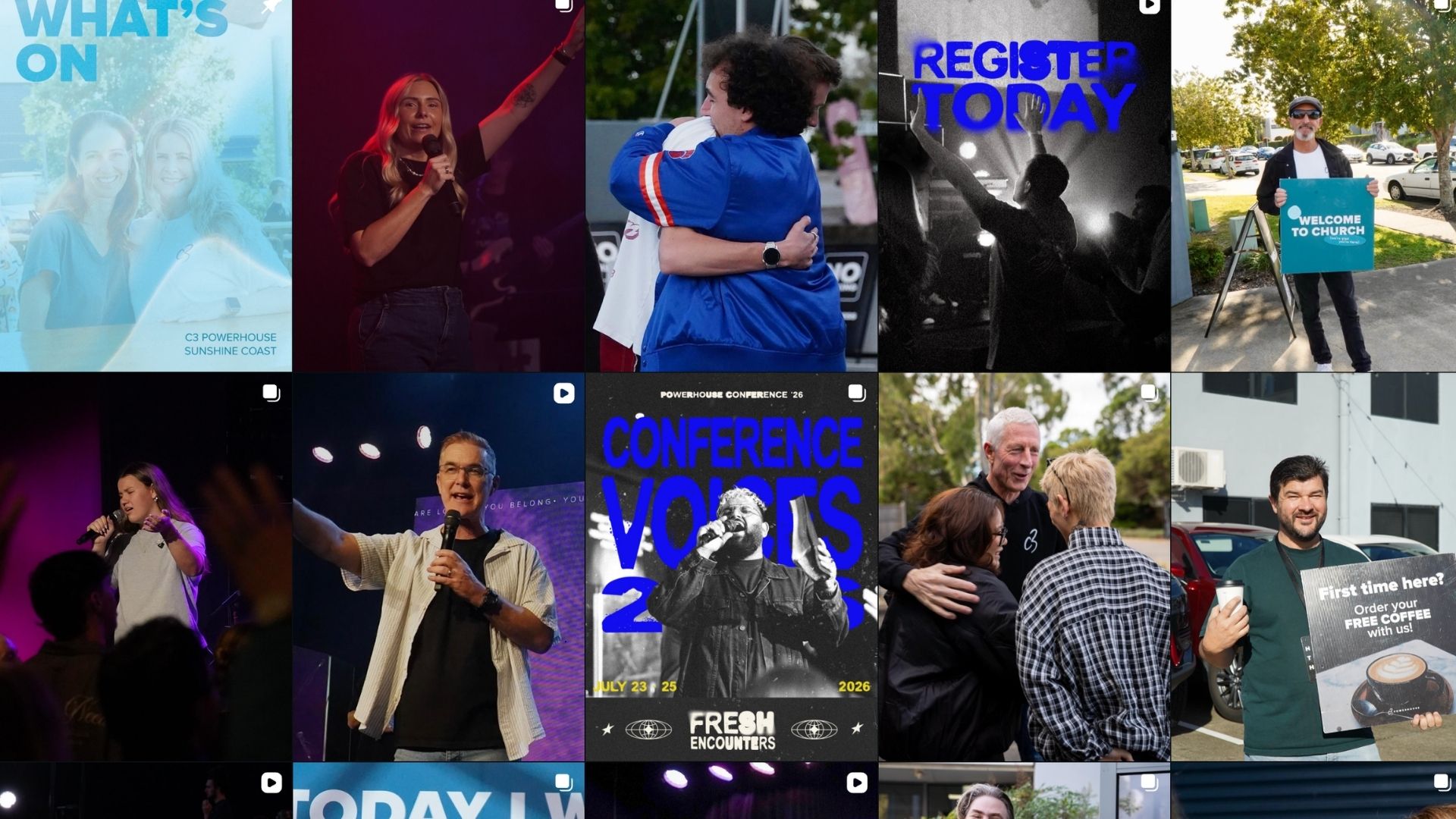
At C3 Powerhouse Sunshine Coast, the approach to social media is simple. It’s a bridge to genuine relationships, not the destination. Our Instagram, Facebook, and YouTube content is designed to invite people into something real, with Christian content that points people to the lord rather than to personalities.
There’s an intentional focus on Kawana and the wider Sunshine Coast community through our digital presence. We want online followers to feel welcome to visit in person as well, while maintaining a clear vision of serving both local people and a wider global audience beyond the church walls, because real church happens both online and offline.
If you’re interested in being part of the digital ministry side of what we do, our Dream Team is always growing.
Balance & Integrity Are Key
There isn’t one definitive “right answer” when it comes to social media evangelism. So much depends on calling, context, and approach. Both the advantages and disadvantages are real, and both need to be navigated wisely.
Done well, digital evangelism is an absolutely valid ministry. It’s still grounded in the same biblical principles that have shaped faith-sharing for generations, reflecting the light of the gospel rather than online hate. Relationships, authenticity, and love are at the centre of everything.
Social media is a tool, not a theology. Its effectiveness depends on the heart and wisdom of the person using it, and it has power for good when used with integrity and love.