

The 4 C’s of Christian Leadership Explained
When Moses stood at the edge of the Red Sea with an army behind him and an ocean in front of him, the people he was leading weren’t impressed. They were terrified. Leadership often looks like that. Standing in front of impossible situations, surrounded by people who need direction, and having no idea what to do next.
Whether you’re leading a team at work, a small group at church, a young family at home, or stepping into a responsibility God has placed on you, leadership can feel like a lot. Not just a new convert, but to everyone. The Bible has plenty to say about what good leadership looks like, and it’s very different from the models the world holds up.
This blog explores the 4 C’s of Christian leadership: character, competence, commitment, and calling. Together, they form a clear, biblical framework and biblical principles for anyone wanting to lead well.
What Is Christian Leadership?
Christian leadership is fundamentally servant leadership, modelled after Jesus Christ. In Mark 10:45, Jesus says, “The Son of Man did not come to be served, but to serve, and to give his life as a ransom for many.” In John 13, He kneels down and washes the feet of His disciples, modelling the kind of leadership that puts others first.
This stands in sharp contrast to secular leadership models, which often centre on authority, achievement, and personal success. Christian leadership isn’t about being the loudest voice in the room. It’s about being the most willing to serve and the most surrendered to God.
Biblical leadership matters everywhere. In church, family, workplace, and community, Christians are called to lead in ways that reflect Jesus. From a Pentecostal perspective, leadership is also Spirit-led. It’s about being filled with the Holy Spirit and empowered to lead in ways that go beyond natural ability.
The 4 C’s framework is comprehensive because it addresses who you are, what you can do, how you keep going, and why you’re doing it.
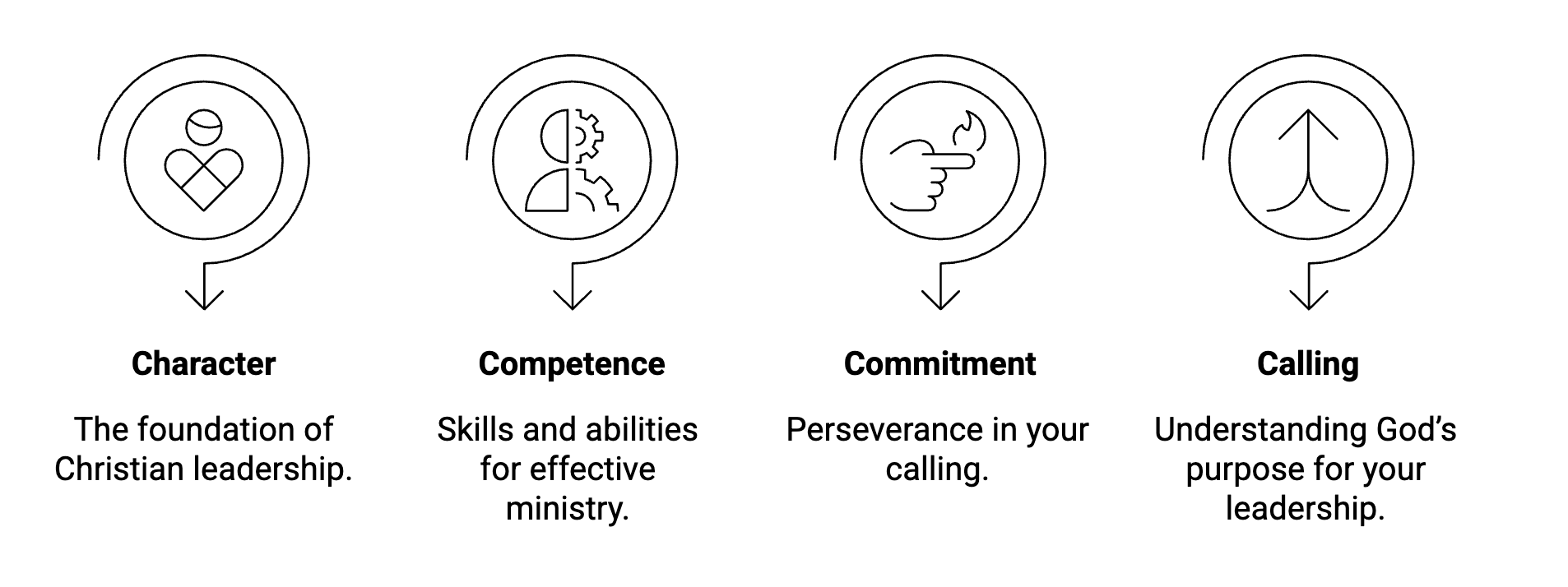
The First C: Character—The Foundation of Christian Leadership
Why Character Comes First
Character is the foundation on which everything else is built. Without it, even the most gifted leader will struggle to make a lasting impact. Skills can be taught. Vision can be cast. But character is what determines whether a leader can be trusted with influence.
Biblical Character Traits of Leaders
Galatians 5:22-23 lists the fruit of the Spirit. Love, joy, peace, patience, kindness, goodness, faithfulness, gentleness, and self-control. These traits are the hallmarks of a Spirit-filled leader, and they’re what people see when character is being formed by the Holy Spirit.
Biblical leaders known for their character (Joseph, Daniel, Timothy) all displayed integrity, humility, and faithfulness. Others, like Saul and even David, faced significant consequences when their character faltered. Gifting may get you in the room, but character is what keeps you there.
Character Development Through Testing and Trials
Character isn’t built in comfort. It’s forged in difficulty. Every leader will face seasons of testing, and how you respond shapes who you become. From a Pentecostal tradition, this is where the Holy Spirit does some of His deepest work, transforming our character from the inside out.
Integrity in Private and Public Life
Real character shows up when no one’s watching. Integrity means living the same way in private as you do in public. Practical steps for development include accountability, regular prayer, studying scripture, and being part of an authentic Christian community.
The Second C: Competence—Skills and Abilities for Effective Ministry
Competence Doesn’t Mean Perfection
Competence is about developing your God-given gifts and learning the practical skills needed to lead effectively. It’s not about being perfect. It’s about being faithful with what God has placed in your hands.
Spiritual Gifts and Natural Abilities
1 Corinthians 12, Romans 12:6-8, and Ephesians 4:11-13 all describe spiritual gifts and how they function within the body of Christ. Every Christian leader has been gifted in specific ways, and stewarding those gifts well is part of effective leadership.
The Parable of the Talents in Matthew 25:14-30 reminds us that what God gives us is meant to be invested, not buried.
Continuous Learning and Growth

Competence shows up in practical areas like communication, pastoral care, administration, and teaching. None of these is a static skill. They grow as you grow. The best leaders are lifelong learners.
A growth mindset matters here. Imposter syndrome is real, but the answer isn’t false confidence. It’s faithful development. God isn’t looking for the most polished leader. He’s looking for the most teachable one.
Equipping Others Through Your Competence
Competence serves others, not self-promotion. The point of getting better is to equip and empower others. Great leaders raise up more leaders, not followers.
The Third C: Commitment—Perseverance in Your Calling
Commitment Beyond Convenience
Christian leadership requires commitment that goes beyond what’s convenient. It’s easy to lead when things are going well. The real test of commitment comes when things get hard.
Nehemiah rebuilt the walls of Jerusalem in the face of opposition, ridicule, and threats. Paul kept going through shipwrecks, beatings, and imprisonment because he was committed to the mission God had given him. These leaders didn’t quit when it got tough. They stayed the course.
Faithfulness in Small Things
Luke 16:10 says, “Whoever can be trusted with very little can also be trusted with much.” Faithfulness in the small things is the training ground for larger responsibility. The leader who shows up consistently for the small things will be entrusted with bigger ones.
Navigating Seasons of Difficulty
Modern leaders face real challenges. Burnout, distraction, discouragement, comparison. These are normal pressures, but they don’t have to derail you. Practical strategies for sustainability include building healthy rhythms, leaning on community support, remembering your “why,” and celebrating small wins.
Long-Term Kingdom Impact
Commitment is about staying faithful for the long haul. Kingdom impact rarely happens overnight. It’s built slowly, through years of consistent obedience. The leaders who change the world are usually the ones who simply refuse to quit.
The Fourth C: Calling—Understanding God’s Purpose for Your Leadership
What Does “Calling” Mean in Christian Leadership?
Calling is God’s specific assignment and purpose for your life. Every believer has a general calling to follow Jesus and live for Him. But God also gives specific callings, unique roles He’s wired you for.
Discerning Your Unique Calling
Discerning your calling takes prayer, time, and community. Look for confirmation through trusted people, alignment with your spiritual gifts, and the doors God opens (and closes) along the way.
Biblical examples include Moses’ burning bush, Paul’s Damascus road encounter, and Samuel hearing God’s voice in the night. God still speaks today, through scripture, prayer, godly counsel, and the leading of the Holy Spirit.
Called to Serve, Not Status
Calling isn’t about status, recognition, or position. It’s about service. The Pentecostal tradition emphasises that the Holy Spirit guides and confirms calling, often through prophetic words and inner conviction. But always, calling leads to service, never to selfish ambition or vain conceit.
Living in Your Assignment
There will be seasons when your calling feels clear and seasons when it feels foggy. That’s normal. Keep walking with God, keep listening, and keep being faithful with what’s in front of you. Living in your assignment is more about ongoing obedience than a single moment of clarity.
How the 4 C’s Work Together
The 4 C’s aren’t isolated traits. They work together as an integrated framework.
Character without competence limits your effectiveness. Competence without character leads to moral failure. Commitment without calling causes misdirected energy. Calling without commitment produces unfulfilled potential.
When all four are growing together, you get a leader who is grounded in who they are, capable of what they do, faithful through whatever comes, and clear on why they’re doing it. That’s the kind of leadership that changes lives and shapes communities.
Developing the 4 C’s in Your Life: Practical Next Steps

Self-Assessment: Where Are You Now?
Take some time to honestly reflect. Where is your character strongest? Where does it need growth? What competencies are you developing? Where are you struggling with commitment? Is your sense of calling clear or unclear right now?
Resources for Growth
Spiritual disciplines like prayer, fasting, scripture study, and mentorship are essential. Look for leadership training opportunities. Read books from trusted Christian leaders.
Finding Leadership Community
You can’t grow as a leader in isolation. Find a community that invests in you. Join a small group. Volunteer in a ministry. Pursue mentorship.
Christian Leadership on the Sunshine Coast
If you’re on the Sunshine Coast and looking for a church community that invests in raising up leaders, C3 Powerhouse is committed to developing leaders who embody the 4 C’s.
The Sunshine Coast is full of potential leaders called to make Kingdom impact in workplaces, families, schools, and ministry. Biblically grounded leaders matter, and they’re shaped in healthy churches that take leadership development seriously.
Christian leadership isn’t about position, status, or platform. It’s about transformation. The 4 C’s (character, competence, commitment, and calling) offer a biblical framework accessible to anyone God is calling to lead.
Wherever you are right now, God is at work in you. He’s shaping your character, growing your competence, strengthening your commitment, and clarifying your calling. The vision is simple. Spirit-empowered, character-driven leaders making Kingdom impact across the Sunshine Coast and beyond.
If you’re ready to keep growing, the next step is community. Find a church, get connected, and step into all God has for you.